The following Twelve Initiatives represent more than systems, protocols, or technological frameworks—they are the living distillation of eight decades of discovery, innovation, and trust shared among a remarkable group of HUMANs. This body of work has been shaped not by corporations or institutions, but by personal relationships, mentorship, and creative convergence between some of the most pioneering minds of the last century.
At the heart of this journey is Alasdair G. “Sandy” Barclay, whose early exposure to the foundations of modern computing began in the company of three visionaries—Grace Hopper, J. Presper Eckert, and John Mauchly—the architects of the first general-purpose electronic computers. From those post-WWII origins, the trajectory of this community would weave through multiple industries and disciplines, always guided by a shared belief: that technology, when anchored in HUMAN purpose, can elevate the quality of life for all.
Through decades of collaboration—across finance, logistics, healthcare, energy, risk, and governance—this circle of HUMANs built platforms of trust that transcended generations. What began as analog systems and mechanical computation has evolved, through digital transformation, into the Alliance iii.o Protocol and its Twelve Initiatives: a global infrastructure designed to serve Communities, support sovereign individuals, and enable legacy-to-digital transitions without losing the HUMAN core.
This gateway is your portal into that ecosystem of ecosystems.
The foundation beneath every Initiative.Where truth, structure, and HUMANsovereignty begin.


Eight decades of innovation distilled into living systems,crafted by the hands of those who built what others now inherit.

Where identity, agency, and value reside with the HUMAN.
Not in servers. Not in institutions. Not in code.
At the core of every Ecosystem is a sovereign HUMAN,
protected by privacy-first infrastructure, OGID identity layers, and Controllable Electronic Records.
Digital Sovereignty means the power to own, authorize, and withdraw—without permission, without compromise.
Together, these Four Pillars form the moral and architectural foundation upon which Alliance iii.o and its Twelve Initiatives are built.
The First Initiative — A Living Framework of HUMAN Enterprise
Before “Initiatives” had names, and before digital transformation was a formal architecture, a small group of HUMANs began building systems of trust, risk, and value across borders and disciplines.
Over eight decades, this group evolved into Alasdair Douglas & Co.—a living scaffold for innovation, governance, and purposeful creation.
AD&C is not a traditional entity. It is the First Initiative: a brand, a trust structure, a design language, and a working collaboration between decentralized autonomous organizations of natural and legal persons, juridical entities, intangible assets, and intellectual property.
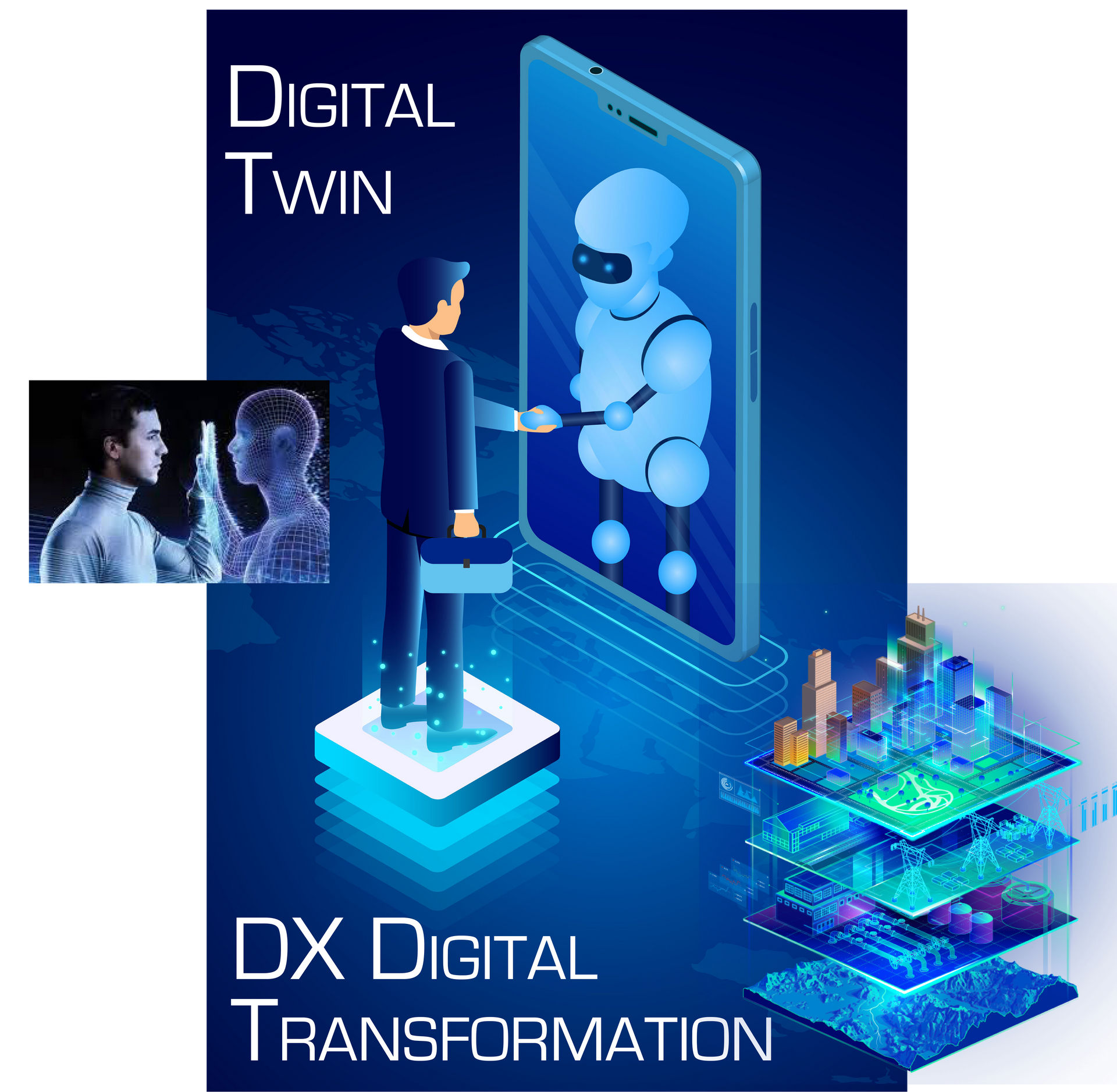
This Initiative supports innovation and discovery through modular, configurable architectures using DX—Digital Transformation, Digital Twins, and the shared infrastructure of the Alliance iii.o ecosystem.
The Evolution of HUMAN Intention into Structure
The Alliance iii.o framework was not built overnight. It emerged over decades—through the actions of people building things that mattered. These Perspectives capture the arc of that development, not as categories, but as four unfolding movements. Each reveals how purpose, place, and principle shaped the systems that followed.
PLATFORMS
In the beginning, we built platforms—not products. These were multi-sensitive frameworks, designed to carry function across legal jurisdictions, cultural differences, and operational layers. Platforms became vessels for identity, trust, risk, and relationship—each tuned to a specific purpose, each expandable by design.
COMMUNITIES
As platforms stabilized, what emerged were not just users—but communities. Groups of HUMANs bound by shared need, function, or geography. These were never passive recipients. They participated, adapted, and improved what was built. It was here we learned that a DAO is not a thing—it’s a community encoded. And Community, once seen clearly, reshapes every design.
INVESTMENTS
With Communities came commitment. And commitment demanded investment—not just in capital, but in time, care, and infrastructure. Over the years, we enabled hundreds of millions of dollars of investment into developing new platforms and new community structures around the world. These weren’t just financial instruments; they were seeds of transformation—planted into systems, cities, protocols, and people.
FOUNDATIONS
What began as a holding structure matured into something more. Foundations became anchoring frameworks—serving social purpose, enabling operations, and meeting regulatory requirements in nearly every jurisdiction we entered. Like the open source world they often mirrored, these Foundations evolved into gathering points: where contributors met, where trust formed, and where shared tools were born. They now serve both as social architecture and infrastructure core—a quiet layer that makes everything else possible.
Over time, these Perspectives have merged, transformed, and recombined—
but together, they express a single idea: human intention, when carried forward with care, becomes system.
Each of these Perspectives serves as both an origin story and a living access point.Barclay Foundation Lighthouse Philanthropies
Extreme Digital. Agile Modularity. Human-Centered Transformation.
To convert legacy insight into future utility, AD&C formalized a universal logic:
Components are configurable building blocks of structure, organization and/or operations,
Digital Assets become the connective tissue of trust and value, and
Transformation occurs through machine learning, AGI, and DCI — curated, sovereign intelligence shaped by HUMAN inputs.
The architecture operates much like “Lego", but for capital, data, risk, health, and identity.
Every block fits. Every layer speaks. Every system evolves.
First Principles Layer
Constitutional and Juridical Encoding
Protocols emerged earliest in the timeline as the moral and legal substrate of Alliance iii.o. Originally derived from a sovereign rights framework under the Swiss Constitution, U.S. Constitution, OAS Treaties and UN Universal Declaration of Human Rights, these Protocols were never meant to be merely software constructs.
They are codified expressions of HUMAN dignity, privacy, and agency—rendered in digital form.
Their formalization began under the Waterhouse Foundation, then extended into the OneGlobal Association framework circa 2000 —creating the first multi-jurisdictional alignment of identity, privacy, and asset protocols.
From this foundation emerged:
• OGID: OneGlobal ID Protocol for persistent, sovereign, portable identity,
• CER: Controllable Electronic Records protocol for HUMAN-rights–preserving asset governance, and
• Entropy-Driven Protocols: Introduced to enable dynamic expression within vector cognition, not just static logic.
Protocols govern all interactions across DIUs, DUOs, DAOs, DAOns, and digital assets.
They act as the spinal layer of the DigitalUniverse, defining not just compliance, but moral structure.
Structural Forms for Digital Autonomy, Utility and Governance
These structures began as digital containers or juridical constructs to map functional relationships across Homeworld and DigitalUniverse, evolving to accommodate intelligent agency, legal compliance, and collective decision-making.
Chronologically:
DIU (Digital Infrastructure Utility) -
A DIU is a digitally instantiated utility, backed by law and designed to represent a specific piece of infrastructure, service, or operational domain. It combines trust architecture, legal containment, and digital programmability.
Each DIU:
Segregates and protects assets, obligations, and operations,
Establishes jurisdictional preferences for law and dispute resolution,
Connects legacy systems and physical infrastructure to digital services,
Rebalances interests among parties, and
Serves as a node for regulated services, innovation, and sovereign operations.
These are containerized legal structures, often operated under nonprofit foundations associated under Lighthouse Philanthropies. DIUs support “dAssets as a Service™”, enabling infrastructure to become programmable and sovereign while remaining compliant with real-world law.
DIU maintain a significant focus on structural risk mitigation, in essence, embedding operational frameworks designed to mitigate risk.
DUO (Digital Units Organisation) DUOs are programmable containers designed to enable modular functions—whether tokenization, service management, or asset interaction. While DIUs tend to be anchored, DUOs are more flexible agents of interaction.
A DUO can:
Issue or operate token-based applications in either Homeworld or DigitalUniverse,
Be nested inside DIUs to help manage or tokenize digital and physical assets,
Execute logic or service contracts across Initiatives or DAOn networks, and
Serve as a sub-organism of a DAO or DAOn, operating with scoped permissions.
DUOs are the task performers and logic carriers inside this ecosystem—modular, nimble, and operationally fluid.
DAO (Decentralized Autonomous Organization)
A DAO in the Alliance iii.o system is not just a digital collective—it is a governance body formed through protocol and purpose, often tied to HUMANs or Communities. These DAOs are Community-first, Privacy-preserving, and Sovereignty-aligned.
Each DAO:
Encodes a purpose-driven logic framework,
Governs resources, services, or access,
Can interoperate with DIUs and DUOs, and
May be instantiated in either Homeworld (with legal recognition) or DigitalUniverse (as pure logic).
DAOs are the constitutional layer of coordination.
DAOn (Digital Assets Organisation [n]) -
A DAOn is a Digital Asset Organisation designed for replication, recursion, and autonomous operation. The “n” denotes an unlimited number of these modular, interoperable structures—each capable of governing, issuing, or executing functions related to digital or physical assets.
Whereas a DAO may govern a Community or purpose, a DAOn is a scalable construct—built to enable:
Issuance and management of Digital Medallions, Controllable Electronic Records (CERs), or other tokenized rights,
Autonomous orchestration of rights across thousands or millions of asset representations,
Dynamic interaction with other Components (DIUs, DUOs, Protocols) in both Homeworld and DigitalUniverse, and
Recursion: each DAOn can spawn sub-DAOns or DUOs with scoped function and self-contained governance.
DAOns are legal-person–optional. Some operate under trust law, some are software-governed, some are supervised by Personal AIs or node agents. They can represent:
Asset clusters,
Rights registries,
Multi-party agreements, and
Ecosystem-based revenue systems.
A DAOn is not just a governance structure—it is a living asset logic system, capable of infinite replication across nodes, ecosystems, and sovereign digital landscapes.
Each DAOn carries a sovereignty signature, a digital birthmark rooted in protocol, permission, and purpose.
These forms are not static. They transform based on jurisdiction, dimensional layer (Homeworld vs. DigitalUniverse), and application purpose (personal AI vs. infrastructure registry vs. public trust ecosystem).
They are juridical–digital architecture that allows sovereign logic to move between worlds, without collapsing into either.
Jurisdictional | aJurisdictional
HOMEWORLD
Homeworld represents the physical, analog, and jurisdiction-bound domain in which HUMANs exist. It includes real-world laws, physical assets, taxation, and legacy structures.
In Homeworld:
DIUs are registered legal entities,
Protocols must align with jurisdictional law,
Personal identity and rights are regulated, protected, and situated, and
Anchoring is deliberate—designed to contain liability and preserve order.
The Homeworld is gravity-bound, and it offers clarity, durability, and constraint.
DIGITALUNIVERSE
DigitalUniverse is the post-jurisdictional, logic-driven, and fluid digital realm where Intelligence, avatars, Personal AIs, and dAssets interact freely. It is borderless, but still governed—by protocols, consent, and entropy-aware systems.
In the DigitalUniverse:
OGIDs, DIUs, DUOs, and DAOns operate without jurisdictional anchoring,
Contracts can be generated, revoked, or evolved based on sovereign rulesets,
Privacy is designed into the network, and
Innovation is fluid, collaborative, and entropic.
The DigitalUniverse is where the HUMAN’s digital self lives, thinks, acts, and governs—sometimes independently, sometimes in symphony with Homeworld.
The Instrument Language of Intelligent Finance and Risk
FLEXTEC™ is a suite of advanced financial convergence technologies, developed by AD&C Principals to facilitate programmable funding, intelligent restructuring, and sovereign asset governance. It is not a product or platform—but a modular contractual language capable of expressing trust, obligation, and mitigating risk within both Homeworld and DigitalUniverse.
At its core, FLEXTEC™ enables:
• Structuring of long-term, high-quality funding and guarantee instruments,
• Dynamic management of collateral, rights, and interest flows,
• Reconstitution of distressed or illiquid obligations without triggering reclassification,
• Interoperation with DIUs, DAOns, and Controllable Electronic Records (CERs), and
• Fully digital instantiation of instruments, with persistent identity via Quantum IDs.
Each FLEXTEC™ form is a Component-class contract, configurable to meet unique jurisdictional, regulatory, and operational objectives.
COMPONENT CONTRACT FORMS
FLEXTEC™ is expressed through multiple instrument classes, including:
• FlexGIA™ – Floating-rate short-term reset obligations backed by sovereign securities, issued by IAC™ Insurers. Enables diversification, lookback provisions, and high credit ratings.
• FlexLoan™ – 30–50 year long-term loans for infrastructure, CRE, and distressed asset pools. Supports forbearance, cashflow mapping, and restructuring without TDR classification.
• FLEXnote™ – A de-securitization vehicle converting debt into participations and zero-coupon note forms. Enhances capital recognition, reduces systemic exposures.
• FlexBond™ – Digitally instantiated debt instruments linked to Controllable Electronic Records (CERs), designed for programmable lifecycle and digital wallet deployment.
• FlexCD™ – Capital and subordinated debt solutions for regulated institutions, designed for compliance and long-term balance sheet optimization.
• FlexETF™ – Framework for bundling Flex instruments into exchange-tradable funds, improving issuer liquidity while preserving bespoke modularity.
• FlexCER™ – Core template enabling any asset, claim, or contract to become a programmable digital right governed under protocol.
• FlexMuni™ – Municipal bond format optimized for QOZ infrastructure, tying repayment to tariff flows, lifecycle reserves, and digital twin oversight.
• FlexGuarantee™ – Converts loans into insured, supranational-grade credit obligations, supported by IAC™-issued policies.
• FlexRewards™ – Framework for transactional loyalty, reward issuance, and treasury-grade internal currencies based on CERs.
APPLICATION LOGIC AND REACH
FLEXTEC™ operates across both jurisdictional and post-jurisdictional domains:
• In Homeworld, Flex instruments are contractually valid, enforceable, and structured under statute, regulatory regimes, and issuer trust structures.
• In DigitalUniverse, they are instantiated as digital organisms—CER-bound, identity-traceable, and governed by entropic protocol, DAOn logic, or AI agents.
These instruments are dAsset-native, allowing issuance, safekeeping, and transfer within wallets, nodes, or ecosystem frameworks like NodeBridge™, HGVS™, or Jazz™.
FlexTec™ gives the system its muscle and ligaments. It allows for everything from sovereign credit to embedded Community rewards—without ever breaking the chain of consent, value, or structure.
Purpose Encoded as Strategic Architecture
An Initiative is not a project. It is a mission-level declaration—a distillation of decades of HUMAN experience into a formal structure of intent, protocol alignment, and sovereign purpose.
Each Initiative is:
Thematic in scope (e.g., banking, risk, health, AI, agriculture),
Constitutional in function (like an Act, Charter, or Mandate),
Designed to align Homeworld constraints with DigitalUniverse opportunities, and
Meant to last, evolve, and remain true to its founding HUMAN commitment.
Initiatives began as analog systems. Then they became platforms, then frameworks.
Now, in the Alliance iii.o system, each Initiative becomes a modular intelligence stack—comprised of DIUs, DAOns, FLEXTEC™ instruments, and protocol-governed agency.
Initiatives are why we build. Each one serves as a nexus of legacy, necessity, and intention—translating generational experience into living governance.
There are twelve core Initiatives.
Each Initiative can be seen as a sovereign field of inquiry and design, protected by protocols and operated through ecosystems.
The Living Field of Interaction
Ecosystems are the applied operational shells of Initiatives. They are where services happen, where rights are exercised, and where Components come alive in the context of Community, territory, or digital agency.
Each Ecosystem:
Is composed of Components: DIUs, DUOs, DAOns, FLEXTEC™ contracts, and Protocols,
Can be instantiated in Homeworld (e.g., via Government Authority) or float in DigitalUniverse,
May carry Digital Medallions, scan data, lease tariffs, or rights instruments, and
Evolves dynamically based on user interaction, AI feedback, or environmental conditions.
Ecosystems may be:
Geographic (e.g., a ScanPort™ in a county-level PAOZ),
Functional (e.g., an AgriCampus for O|Ma™ or an AI mesh for Bahii™),
Temporal (e.g., a HealthPort™ operating only for the duration of a Long COVID program), and
Distributed (e.g., a wallet-based DAOn governing thousands of CER-based transactions).
Where Initiatives are strategic, constitutional, and cross-generational, Ecosystems are operational, adaptive, and grounded in now.
Each Ecosystem is powered by humans and agents—governed by consent, organized by purpose, and integrated with surrounding systems.
The Relationship Between the Two
Initiatives define the why.
Ecosystems enact the how.
Initiatives are persistent.
Ecosystems are modular and evolvable.
Initiatives are often anchored by origin stories, white papers, or governing declarations.
Ecosystems are built from live Components, often changing form to meet immediate needs.
You could say: Initiatives are the constitutional DNA. Ecosystems are the living organism.
Together, they close the loop of design:
From purpose → to structure → to behavior → to feedback → to regeneration.
A Sequential Journey
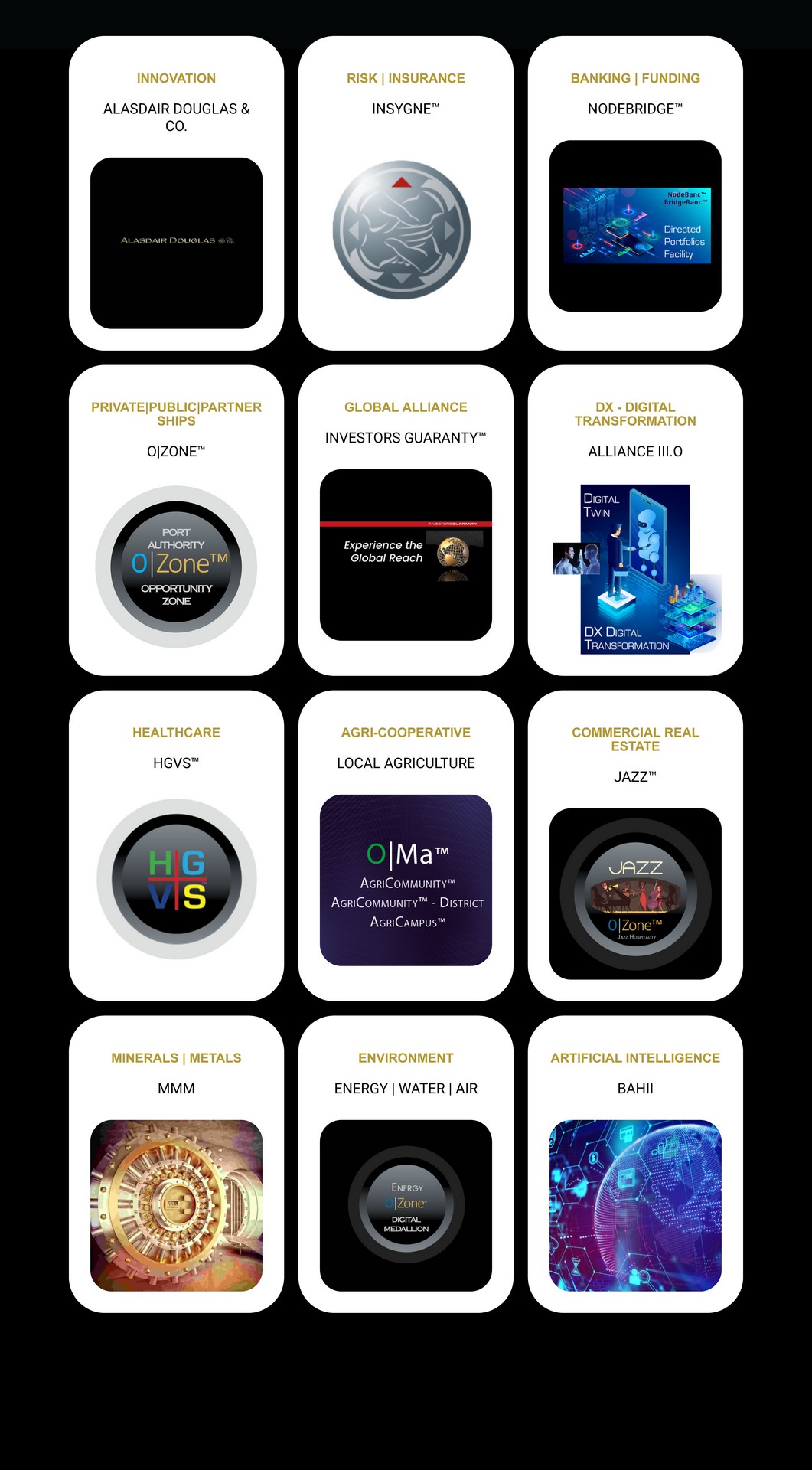
The following journey through a dozen Initiatives offers insights into the application of modularity concepts—exemplified by open-source computing and lego-type components—developed by AD&C Principals on a timeline now converging with artificial general intelligence (AGI) and digital curated intelligence (DCI). The concepts were designed to enhance Communities, streamline financing, mitigate risks, and improve efficiency and productivity.




A digital brand alliance of advanced international legal entities with technology component infrastructure facilities and associated advanced digital intelligence innovations.
Principals of Alasdair Douglas & Co. have developed an extensive platform of Components and advanced technologies which may be used to create Ecosystems within an Initiative. For parties wishing to become a member of AD&C, or participate in its various activities, learn more at the link below.
Insygne™ Initiative is a pioneering platform dedicated to transforming risk management through innovative solutions for mitigation, transfer, sharing, and acquisition. By integrating cutting-edge digital technologies, bespoke insurance solutions, and advanced portfolio frameworks, the Initiative addresses the complex needs of insurers, mutual risk groups, retirement funds, corporate bond portfolios, securitization funds, and more.
With the expertise of Insygne™ IAC Insurers, FlexTec™ contract forms, and regulated bank trustees under Lighthouse Philanthropies “Barclay Foundations”, Insygne™ delivers tailored, modular solutions for managing both traditional and digital assets, empowering participants to optimize portfolios and navigate global challenges with resilience and flexibility.
AD&C Principals invented and patented insurance securitization globally, as well as an advanced form of long-term funding. Creating a new form of municipal finance lead to long-term port authority funding.
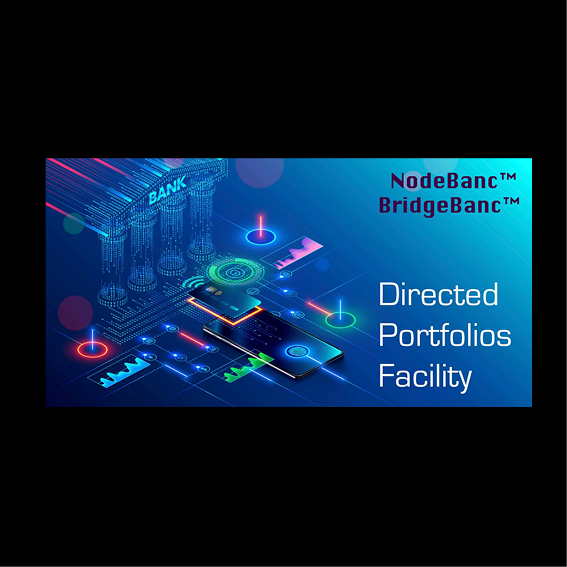
NodeBridge™ technologies enable digital infrastructure utilities designed to enhance operational efficiency, mitigate systemic risk, and drive revenue growth for depository institutions and other lending organizations. By leveraging advanced technologies such as Directed Portfolio Facilities (DPFs) and modular financial frameworks, NodeBridge™ enables institutions to optimize funding, manage risks, and comply with evolving regulatory standards.
Its adaptable design supports flexible funding solutions, including municipal funding, loan participations, and community-based economic development, providing a scalable foundation for sustainable financial growth.
AD&C Principals have facilitated new forms of bank capital, custody and trust structures internationally, to increase service revenues for more than five decades.
Investors Guaranty Global Alliance™ (IGGA) develops, creates, and finances global entities focused on advancing financial services, risk management, and compliance systems. Since early 2000s, IGGA has leveraged innovative technologies in areas such as government systems, financial data integrity, and real-time risk analytics, supporting banks, insurers, exchanges, regulators, and global markets.
Beyond finance, IGGA has led innovation in sports visualization and media, enhancing experiences across over 30+ global sports. With a two decade focus on digital assets and intellectual property, IGGA continues to drive sustainable innovation aligned with evolving global standards and practices.
Alliance iii.o is an advanced framework designed to extend the concepts of Web 3.0 and Digital Transformation into a modular, decentralized architecture. By integrating cutting-edge technologies such as artificial intelligence, advanced forms of blockchain, and Digital Twins, Alliance iii.o fosters innovation across industries, enabling adaptable and scalable solutions for global challenges.
Its focus on privacy, collaboration, and seamless data exchange supports development of robust ecosystems that empower Communities, drive economic growth, and enhance sustainability in both traditional and digital domains.
AD&C Principals have developed myriad Protocols which begin with HUMAN as the core element in a global data framework. A key focus is "Your Data is Your Data".

HGVS™ (Human | Knowledge | Life | Science) is an advanced Initiative dedicated to transforming healthcare through innovation, personal privacy, and patient-centric design. At its core, HGVS redefines how medical services are accessed, financed, and delivered—empowering patients, doctors, hospitals, and communities to participate in a next-generation ecosystem of care.
By leveraging Digital Transformation technologies, artificial intelligence, and multi-modal diagnostic scanning, HGVS Initiative addresses complex modern health challenges—starting with Long COVID and extending into the foundational structures of rural care, emergency response, maternity services, and robotic surgery.
Its integrated architecture brings together:
ScanPort™ Ecosystems to accelerate advanced diagnostics in urban and suburban regions,
HealthPort™ Campuses to deliver full-spectrum healthcare services into rural America,
And a transformative Medical DX™ Ecosystem to convert clinical data into structured, monetizable intellectual property and Controllable Electronic Records (CERs).
Together, these ecosystems generate not only improved wellness and vitality outcomes, but also new forms of sustainable funding through integration with the O|Zone™ Initiative.
Each deployment operates within a local Port Authority Opportunity Zone (PAOZ), using tariff-based funding, private–public-community partnerships, and federated cooperative governance to support both local government services and community-directed reinvestment.
HGVS is not merely a healthcare upgrade—it is a systemic realignment of economic infrastructure, digital rights, and human agency in health.
The Initiative begins with real deployments—such as the first ScanPort prototype in Oklahoma City—and scales nationally through aligned finance, federated digital infrastructure, and inclusive access to care.
O|Ma Initiative is a transformative program that integrates the AgriCommunity™ and AgriCampus™ Ecosystems to revolutionize sustainable agriculture, Community development, and rural innovation, particularly in Qualified Opportunity Zones (QOZs) and Port Authority Opportunity Zones ("PAOZ").
Supported by O|Zone™ funding, the Initiative is designed to provide modular agricultural infrastructure, shared equipment resources, and advanced research hubs to empower local farmers, startups, and cooperatives. With a deep emphasis on community engagement and global exchange, O|Ma facilitates scalable, localized solutions to address urgent challenges in food security, climate resilience, and economic self-determination. enhance agricultural productivity and economic growth.
Rooted in the belief that sustainable agriculture is both a local and planetary imperative, O|Ma enables communities to leverage advanced tools—from Seed to Need cultivation strategies to Digital Twin–enabled traceability—to unlock new economic pathways while restoring environmental balance.
Through collaborative innovation and regenerative capital frameworks, the Initiative brings together public, private, and community sectors to support long-term vitality across regions and generations.
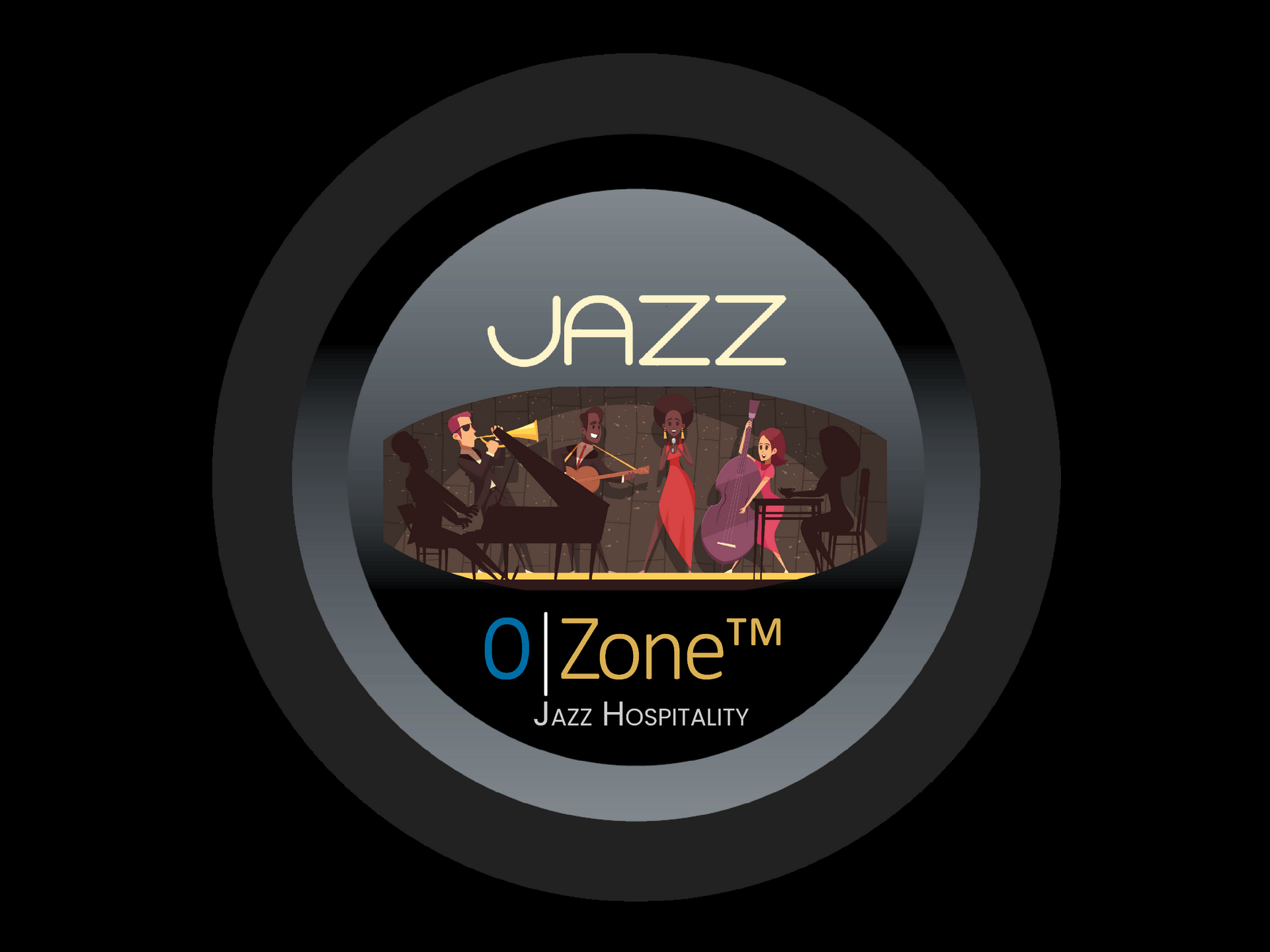
Jazz Initiative is an innovative framework that redefines commercial real estate, hospitality, and urban development by providing adaptive solutions for restructuring and revitalizing underutilized properties.
At its core is a proven system of long-term digital financing, supported by FlexLoan™, FlexTec™ contracts, and FlexGIA™ Series financial instruments, designed to mitigate market, credit, and operational risks.
By integrating public and private sector funding through O|Zone™ PAOZ, the Initiative enables the transformation of assets into sustainable, multi-use developments that align with modern economic and community needs.
Tailored for banks, CMBS funds, insurers, and institutional investors, Jazz Initiative is designed to deliver bespoke solutions that unlock value, drive economic growth, and enhance Community resilience.

MMM Initiative is a transformative program focused on revolutionizing artisanal and small-scale mining (ASGM) through sustainable practices, advanced technologies, and innovative funding mechanisms.
Central to the Initiative is the integration of O|Zone™ resources and FlexGIA™ Reference Series funding, providing secure, scalable financial support backed by U.S. Treasury obligations and statutory gold reserves.
By leveraging cutting-edge tools such as robotics, artificial intelligence, and digital transformation, MMM Initiative is designed to enhance mining efficiency, environmental stewardship, and community well-being, creating a sustainable and equitable framework for global resource development.
The Environment Initiative is a regenerative platform focused on air, water, land, and energy systems, using advanced technologies, innovative funding, and community-driven governance.
By leveraging Digital Transformation and integrating operations within O|Zone™ Port Authority Opportunity Zones (PAOZs), the Initiative empowers communities to identify, remediate, and prevent environmental degradation through localized intelligence and scalable infrastructure.
With tools like Digital Twins, modular energy systems, and real-time data analytics, the Initiative links environmentally focused communities into a shared innovation framework—expanding economic opportunity while building ecological resilience.
This model supports both planetary stewardship and thriving local economies through a connected, sustainable future.
Bahii™ Initiative is a visionary framework focused on advancing artificial intelligence (AI) and machine learning (ML) to drive global digital transformation and innovation.
With the goal of integrating cutting-edge technologies like large language models, generative AI, and voxel/vector data systems, Bahii™ seeks to enhance the capabilities of diverse Initiatives and Ecosystems, including the GreenBox™ and GreenFrame™.
By leveraging digital twins, predictive modeling, and adaptive AI-driven systems, the Initiative aims to create scalable, interconnected infrastructures that optimize efficiency, sustainability, and resilience across industries and Communities.